
Oxidation Systems
PRODUCTS
-
 Services")
Providing around-the-clock support, enabled by at least two QPs per assignment, delivering full continuity, and reduced risk.
-

Building on the capabilities of the NP-RD10A benchtop tablet press (discussed in our previous article on USP <1062>), our services are further enhanced by the integration of the Presster™ compaction emulator. This state-of-the-art tool is designed to replicate the compaction dynamics of production tablet presses in a laboratory setting. It allows for tangible fine-tuning of the compression cycle, providing an accurate depiction of how a tablting formulation will behave under commercial manufacturing conditions. Using the Presster, Natoli Scientific can simulate full-scale production, permitting us to forecast problems before they escalate to costly production delays. Our experts can optimize the tablet design for our clients, ensuring a smooth transition from laboratory to production while adhering to the rigorous standards set by the industry including the current USP <1062> chapter.
-

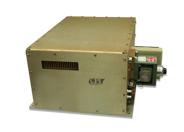
CPI EDB offers the 3469 magnetron transmitter system for use as a high-power source of RF power for outdoor-mounted radar applications. The transmitter cabinet contains the high voltage power supply, solid-state switch, and the high voltage tank assembly which includes the pulse transformer, energy storage high voltage capacitor, and filament power supply.
-

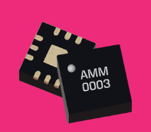
The AMM-9862PSM is a compact, wideband gain block amplifier designed for high-performance RF applications.
-

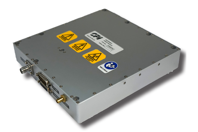
The PTXM9754 is an ultra compact modular microwave power module (MPM) with an integrated “super mini” travelling wave tube (TWT), a solid state preamplifier and an optimised high density switch mode power supply.


WHITE PAPERS AND CASE STUDIES
-
 Global Start-Up For Multinational Geographic Atrophy Trial
This partnership allowed a leading biopharmaceutical company to navigate the complexities of a Phase IIb study investigating a novel pegylated RNA adapter for geographic atrophy secondary to dry AMD.
-
 Reducing The Burden Of Patient Retention And Improving Continuity
Immunology trials often place a sustained burden on participants. However, integrating Home Trial Support (HTS) into a Phase 3 immunology trial can help improve the overall study experience.
-
 Turning Continuous Acoustic Data Into Measurable Water Savings
Aging underground infrastructure can cause severe, invisible non-revenue water losses. Implementing continuous acoustic loggers with AI-driven analytics isolates the precise signatures of subsurface leaks, allowing utilities to target hidden failures early and maximize capital efficiency.
-
 How Smart Process Automation Cut Wastewater Chemical Costs By $75,000 Annually
Discover how a major wastewater utility transitioned from manual, static dosing to real-time, autonomous optimization software, stabilizing hydrogen sulfide scrubber efficiency above critical targets while slashing chemical operating costs by twenty-five percent.
-
 Protecting Critical Operations: Control Point Installation At A Major Military Base
Discover how a military installation established a critical 8-inch line control point in just 1.5 hours under live system conditions, preserving full operational readiness and avoiding a disruptive base-wide water shutdown.
-
 AEC PFAS Removal System Reduces PFAS Contamination In New Jersey
This case study demonstrates the effectiveness of a new technology for removing PFAS from well water to below the EPA’s detection limits.
-
 Compaction Simulation For Tablet Technology Transfer And Scale-Up
Compaction simulation de-risked tech transfer for a 40 mg fexuprazan tablet by defining optimal roller compaction and lubrication parameters before scale-up. Access the full case study to see the data.
-
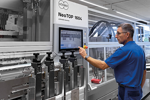
 Why A Leading Manufacturing Partner Chose NeoTOP Packaging Machines
Learn how a leading CDMO partnered with Körber to quickly deploy a high-speed packaging solution to meet tight production deadlines in the face of a global pandemic.
-
 Loudoun County Deploys Acoustic Leak Detection & Recoups Cost With Savings In NRW
Advanced acoustic sensors help growing utilities identify hidden leaks and prevent costly pipe bursts. By shifting from reactive to planned repairs, municipalities can significantly reduce non-revenue water loss and recoup technology investments through operational savings.
-
 Vassar WWTP Eliminates Rags To Protect Equipment, Biosolids Quality
The Vassar wastewater treatment plant (WWTP) in Michigan confronted persistent challenges from non-dissolvable solids by adopting Duperon's Dual Auger System (DAS) to address these issues effectively.
-
 End-To-End Inventory Control Supports Biotech's Expanding Portfolio
Many organizations struggle with siloed operations, but this modern GxP inventory solution solves these challenges by providing a centralized, cloud-based platform for end-to-end visibility.
-
 Collaborative Tech: How Dunea Is Boosting Network Visibility And Resilience
Integrating high-frequency sensor data with digital twins enhances network visibility and accelerates response times. This collaborative approach allows utilities to detect anomalies instantly, optimize maintenance, and simulate operational scenarios to ensure long-term system resilience.









NEWS
-
SPML Infra Wins ₹385 Crore (USD 45 Million) Order For Water Infrastructure Project In Rajasthan Under The Jal Jeevan Mission7/11/2025
SPML Infra Limited, SPML Infra Limited, India’s leading water infrastructure company, has been awarded a prestigious ₹385 crore (USD 45 Million) project for the Water Production & Supply System for Kekri-Sarwar Sector Package-III in Ajmer, Rajasthan.
-
AMBIR Launches Advanced Healthcare Barcode Scanner Series To Enhance Patient Safety And Clinical Productivity7/2/2025
AMBIR Technology, a leading provider of digital capture technology for businesses and consumers.
-
ZEISS Supports The Transition Of Spatial Biology To Clinical Research4/28/2025
Today marks the global launch of ZEISS Axioscan 7 spatial biology. The newly optimized slide scanner is the central component of a novel analytical workflow solution portfolio – spanning from sample staining to result reports – tailored to spatial biology applications in clinical research environments.
-
STMicroelectronics Announces Mass Production And Lead Customer Success For Turnkey Bluetooth/Wi-Fi Modules Developed With Qualcomm6/4/2025
STMicroelectronics has announced mass-production start for its ST67W611M1 combined Wi-Fi 6 and Bluetooth Low Energy 5.4 module, describing the early success of Siana, a lead customer for its fast-to-market connectivity.
-
As The PIC Ecosystem Grows, So Grows The Future Prospects For PICs5/2/2025
One debate that continues within the integrated photonics community is how far, or rather how soon, integrated photonics will transform data centres into more efficient, monolithic computing platforms for AI.
ABOUT
Oxidation Systems
Waste treatment, ground water remediation and food processing are some of the areas that heavily rely on oxidation systems. Ozone generators, hydrogen peroxide and potassium permanganate are some of the oxidation systems that are important in different oxidation processes. The acquisition of these oxidation systems can be easily done through specialized dealers. It is advantageous to deal through these dealers since they have vast knowledge of what are essential for different processes. Some of these dealers design sell and in certain instances lease these systems. Their experience with advanced oxidation systems, ozone and potassium permanganate makes them the best people to use when such and related concerns arise.
There is no doubt about the transformation that the chemical oxidation technologies have taken. Specialists in the oxidation field work hand in hand with the interested parties in solving all their oxidation related needs. This sequential process begins with the selection of the appropriate oxidation need. Once a technology is selected, they work with the client step by step in designing the system that is suited to one’s application. Other than the identification and assembly, they will provide assembly and maintenance services.
There are certain elements of oxidation systems that one should always know when dealing with these systems. Injection trailers, metering systems and pilot testing systems are some of the things that might be relevant for different oxidation system types and scales. For instance, one involved in ozone oxidation need to be familiar with ozone generators and ozone pilot testing systems.
Like any other process, oxidation need ought to be measured by considering the aspects of benefits and cost. This calls for meticulous review of the energy and chemical costs as well as the by-products. Many tend to forget about the by-products during the initial planning phase until when they have to disinfect them.